
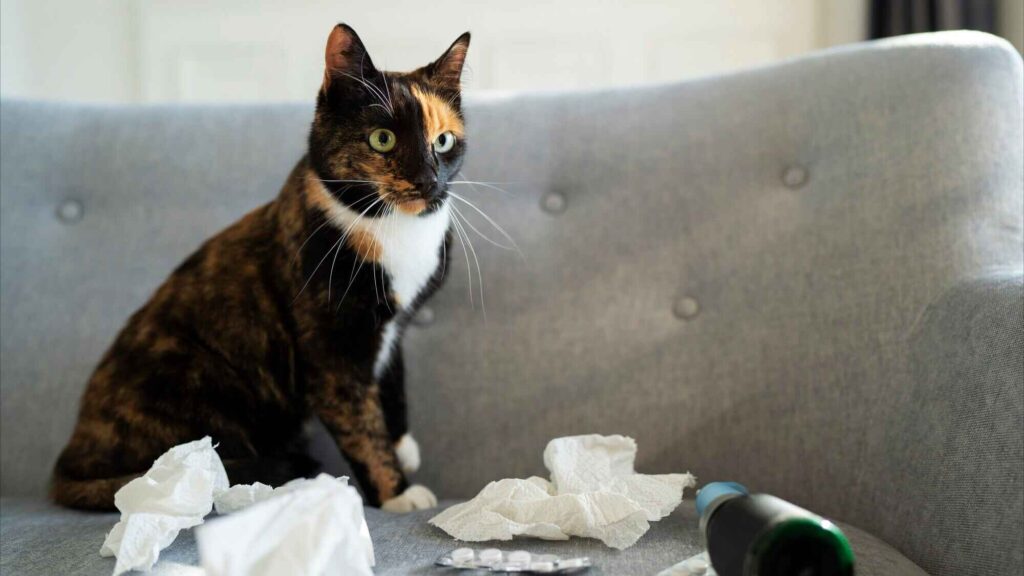
If your cat is throwing up white foam, it could result from several factors. This often occurs when your cat has an empty stomach or is well after eating, and they may vomit up white foam.
This isn’t usually too much cause for concern and can happen after your kitty eats too quickly or has a hairball. However, if vomiting is frequent, this may indicate a more serious problem.
It’s hard to see your cat not feeling well, particularly when it goes on for a long time vomiting. Though a single vomiting incident is not usually an issue, if it keeps happening, it might be an alarm bell for an underlying problem that might need a veterinarian’s attention.
Cat throwing up white foam? The Answer
If your cat is vomiting white foam, it could be due to indigestion, where hydrochloric acid builds up in an empty stomach. Hairballs from grooming too much are another common cause.
Severe conditions like kidney, thyroid, diabetes, or pancreatitis might also be the reason. If your cat vomits blood-yellow foam or shows signs of abdominal pain, see a vet immediately for diagnosis and treatment.
Why Do Cats Vomit White Foam?
If your kitty is throwing up foamy white vomit instead, it may be a sign that he’s experiencing indigestion, which is the result of the buildup of gastric juices and hydrochloric acid in his belly. Hairballs are another frequent culprit, particularly if your cat is swallowing too much fur while grooming.
More severe causes could be kidney, thyroid, diabetes , or pancreatitis. Symptoms like vomiting blood, yellow foam, and abdominal pain require a vet visit for diagnosis and treatment.
What Are Some Common Reasons for Vomiting White Foam?
If your cat is puking clear liquid, the causes might be indigestion or an empty stomach, which irritates gastric acid. Hairballs are another frequent cause since cats swallow hair when they groom themselves. If the hairball is not expelled, you may vomit the hairball up.
More serious causes can include gastrointestinal disorders such as gastritis and IBD and will need to be diagnosed by a vet. If your cat is vomiting frequently or has symptoms such as tiredness or a loss of appetite, appropriate veterinary treatment is necessary.
What to do if Your Cat is still Vomiting?
If your cat is still vomiting despite following these tips, seek professional help from a vet. Chronic vomiting could indicate health issues that can become severe if the dog does not receive proper treatment.
Your vet can provide personalized guidance and treatment recommendations to suit your cat. Occasionally, they suggest a deep dive into diagnostics to find hidden problems.
In the long term, your vet may prescribe dietary changes, medications, or lifestyle changes. Closely monitoring your cat’s health is essential for comfort and pain management. You can control chronic vomiting and keep your cat healthy by working with your vet.
What You Can Do to Avoid Your Cat From Getting Sick?
To avoid vomiting white foam in your cat, you must consider dietary management, routine visits to the vet, and the basics of good grooming practices. Frequent, preventative brushing also decreases the amount of hair ingested, reducing hairballs, particularly in long-haired breeds.
Provide fresh water maintenance and add wet food for higher hydration. The more stress is reduced, the better their digestion and mental stimulation come with a peaceful environment and environmental enrichment.
These preventative approaches can control and minimize vomiting and other gastrointestinal symptoms.
Causes and Treatments
When your cat vomits white foam, it can be a symptom of underlying health issues. First, take your dog to a vet for a full check to determine the problem. Dietary issues, such as introducing a hypoallergenic diet or smaller meals to help enhance hydration, are nutritional issues.
Your vet might prescribe anti-nausea antacids or even antibiotics to fix it. To get a good handle on your cat’s overall health, your vet might suggest blood work, an X-ray, or an ultrasound to assist with symptom management and keep your kitty comfortable.
When to Call the Vet
Vomiting White Foam: With Other Symptoms If your cat is hacking up white foam and doing so somewhat regularly, don’t call this “the normal.” One episode of vomiting is probably nothing to worry about; if your kitten vomits repeatedly, that’s another story.
You should call your vet if your cat appears lethargic, uninterested in food, has diarrhea, or seems “off.” Do not wait for the symptoms to progress or get worse. This is a problem if your cat is vomiting or seems sick. It could be a signal of other health problems that require urgent attention.
The assistance of a vet will enable you to find out what the source is, and the vet will then be able to administer the treatment your sick pet needs to allow your furry friend to regain some relief.
Empty Stomach or Hunger?
Some examples include when your cat vomits white foam due to emptiness or hunger. Cats, especially those that have been used to grazing, require smaller meals more frequently.
Scratching on an empty stomach can inflame the stomach wall; bile and stomach acid worsen the condition, irritating the stomach more, and so on. This system parallels human acid reflux but occurs deeper in the GI system.
It typically happens in the early morning when you are well due for a meal. 3- Despite vomiting foam, your cat will likely be happy and willing to eat. Frequent grazing can help avoid these incidents and combat stomach problems.
Related Articles: Why is My Cat Sneezing Signs of Cat Dehydration Prevent Kidney Failure in Cats
