
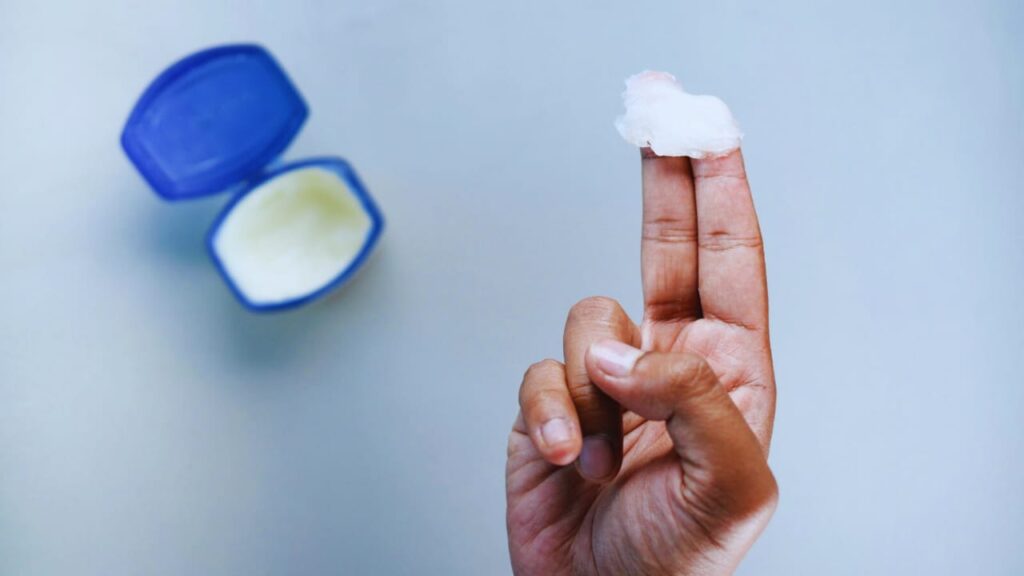
Vaseline, also known as petroleum jelly, is widely employed to moisturize and heal tiny wounds and cuts. It’s safe for both humans and cats to apply it externally. A lot of cat owners use the product to treat dry or cracked paws.
These owners benefit from its moisturizing properties. Although it’s safe to consume in small quantities, it does not provide any nutritional benefits and should not be fed to your cat in greater quantities.
Is Vaseline Safe for Cats? The Answer
Vaseline, an oil-based petroleum jelly made from waxes and mineral oils, is safe for external use on both cats and humans. It’s often used for treating dry paws as well as cracked paws because it’s moisturizing and helps soothe and aid in recovery.
Make sure you massage it gently and refrain from applying too much since large chunks of it can trigger your cat’s shaking. It can be left on surfaces like floors and walls.
While Vaseline isn’t harmful in small quantities, it shouldn’t serve as a food item for your feline. If your cat is licking or chewing on it, limit the amount or seek a solution to heal damaged paws.
Vaseline and Its Use on Cats’ Body Parts?
Vaseline, also known as petroleum jelly, is safe to use externally on cats. It helps with cracked or dry feet due to its moisturizing properties. For the nose and ears, it can ease dryness, but you must be careful to stay clear of excessive use.
Apply it lightly on the bottom of your bum when needed to treat discomfort or dryness. Vaseline should not be given to your cat as it offers no nutritional value and can be harmful in large quantities. Be sure to limit the amount you feed when your cat begins chewing or licking it.
Cats and Vaseline
Vaseline, also referred to as petroleum jelly, is derived by combining petroleum products, such as crude oil and gasoline. It is safe for pets and human beings. Petroleum jelly is triple purified and free of cancer-causing chemicals and is suitable for external use.
Vaseline forms a protective layer on the skin and is not absorbed. It is typically safe to apply to your cat’s pads or skin, and if a small amount is ingested, it doesn’t cause harm.
The digestive tract is not able to absorb it, and it may even aid in the removal of hairballs by creating an enveloping layer in the digestive tract.
Risks of Using Vaseline on Cats
Although Vaseline can be beneficial in controlling constipation and hairballs, you must be aware of the potential dangers. Vaseline is a type of petroleum jelly composed of a mixture of waxes and mineral oils.
If your cat breathes in these chemicals, it could cause aspiration pneumonia or fatal lung toxicity. It is, therefore, essential to ensure that you keep Vaseline off your pet’s face, specifically their nose, in order to prevent accidental inhalation.
Furthermore, Vaseline can cause water loss and nutrient loss within the digestive tract, which can lead to stomach problems, diarrhea, vomiting, and dehydration. Cats who have health issues could be more vulnerable to these effects.
Always consult with your doctor prior to making use of Vaseline as a solution for hairballs or any other problems.
Alternatives to Vaseline for Cats
If you’re searching for options other than Vaseline to treat your pet, you can find more natural alternatives that can aid in reducing dry paws and hairballs. Coconut oil is an excellent option that can help moisten dry paws and even prevent hairballs.
It is safe for pets to consume small amounts. A different option is to use petroleum-free lotions specially designed for pet use that are generally more secure and designed to prevent the risk of toxicity.
Suppose your cat has been diagnosed with more severe digestive issues, such as constipation. In that case, you should seek out a veterinarian to determine the best treatment options, such as laxatives or supplements for fiber.
How to Safely Use Vaseline on Cats
To ensure safety when using Vaseline on your pet, make sure you apply it to the skin in small quantities. It is commonly used to treat hairballs and dry paws. Massage it gently into the affected area or paws. However, be cautious not to apply it too excessively.
Do not apply it to the nose or face because accidental inhalation can result in respiratory problems. Please do not force your cat to consume Vaseline because it could cause digestive problems.
If your cat begins chewing or licking the product, cut down on the amount or seek advice from your vet to find alternative solutions.
Related Articles: Is Sugar Harmful for Cats? Is Cinnamon Poisonous to Cats? Is Vinegar Harmful to Cats? Is Baking Soda Safe for Cats?
